Weixin Service
 DouYin
 KuaiShou





Starting from the rise of "chips": decoding the chain reaction behind the AI driven storage price increase in the industry chain
Date:2025-12-19 15:53:30 Views:2101
By the end of 2025, the price fluctuations in the global storage and memory market will become a focus of attention for the electronic components industry, with the market describing this rare price increase as "one price per day" or even "several prices per day". Since September this year, the spot price of mainstream memory models has risen by over 300%, with such speed and magnitude that industry insiders who have been in the industry for more than ten years have bluntly stated that it is the first time. This round of price increases is not a short-term fluctuation, but is widely believed by the industry to initiate a "super cycle" that may last for several years. The driving forces behind it, the reshaping of the industry chain, and the impact on future consumer electronics are all worth exploring in depth.
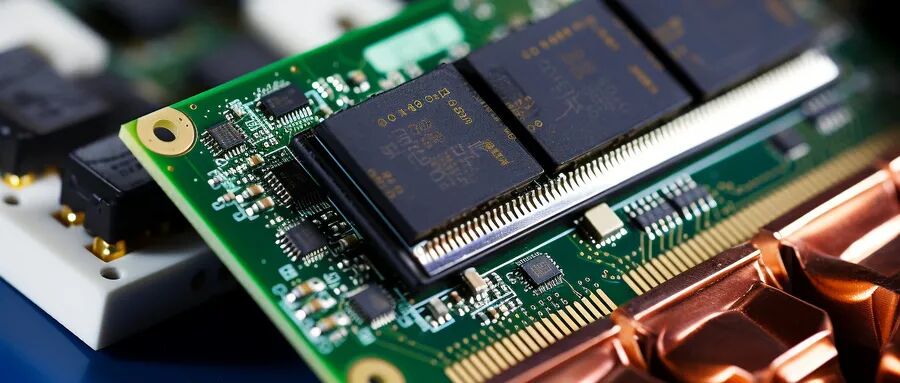
The core reason for the surge in storage prices this time is the structural imbalance between supply and demand caused by the wave of artificial intelligence technology. Unlike previous cycles driven by consumer electronics, the main force in this demand is cloud service providers building intelligent computing centers and data centers. The transition of artificial intelligence big models from training to inference stage has given rise to a massive demand for "storage power". A typical artificial intelligence server requires 8 times more DRAM (dynamic random access memory) and 3 times more NAND Flash (flash memory) than a regular server. To meet the ultimate requirements of AI servers for high bandwidth and high performance, global storage manufacturers such as Samsung and SK Hynix have prioritized shifting their production capacity to higher profit HBM (High Bandwidth Memory) and DDR5 memory. This production capacity tilt has led to a key contradiction: on the one hand, the expansion speed of high-end HBM production capacity cannot keep up with the surge in demand, and SK Hynix's HBM production capacity before the end of 2026 has been locked in by major customers in advance; On the other hand, a large number of existing and newly added servers still rely on mature and stable DDR4 memory, and their production capacity has been greatly reduced due to being squeezed, resulting in severe supply shortages, sharp price increases, and even abnormal phenomena of DDR4 prices surpassing DDR5. At the same time, it takes at least two years for semiconductor wafer fabs to go from construction to production, which means that it is not possible to alleviate supply pressure in the short term by adding new production capacity.
The drastic fluctuations in storage prices are triggering a profound and differentiated chain reaction throughout the entire electronic component industry chain. Semiconductor equipment and manufacturing enterprises in the upstream of the industrial chain have benefited first, with storage equipment orders from companies such as Northern Huachuang maintaining a good trend, and SMIC's capacity utilization rate also maintaining a high level of 95.8%. The storage module factory located in the middle of the industrial chain has achieved significant growth in operating income and net profit as its product prices follow the market trend. However, the most severely impacted are undoubtedly consumer electronics manufacturers downstream of the industry chain. Memory typically accounts for 10% to 20% of the hardware cost of products such as smartphones and computers, and its skyrocketing price directly leads to an increase in overall machine costs. Faced with cost pressure, large manufacturers such as Xiaomi can still smooth out the pressure by signing long-term supply agreements with upstream companies, adjusting product structures, or ultimately increasing prices. But for small and medium-sized manufacturers with weak bargaining power, especially in the low profit low-end mobile phone market, the increase in storage prices will seriously squeeze their survival space, which may lead to a shift in demand for purchasing phones to the second-hand market. In order to control costs, some end products may have to "downsize", such as reducing the standard capacity of memory and flash memory, which means that the trend of rapid upgrading of storage capacity in the past few years may be reversed.
From a long-term perspective, this' super cycle 'may catalyze profound changes in the storage industry and even the broader semiconductor industry. Firstly, the core of industry competition is shifting from scale expansion to technological depth. Manufacturers who have mastered cutting-edge technologies such as HBM have significantly increased their pricing power, and the previous state of "low gross profit and internal competition" in memory products is expected to be broken. Their value perception in the industry chain is being re evaluated. Secondly, the market landscape is facing reshaping. International giants such as Micron have announced the termination of some consumer grade storage businesses to focus resources on higher profit data centers and AI fields. This brings historic opportunities to domestic storage enterprises. Under the policy support of the country for computing infrastructure and storage capacity construction, domestic enterprises represented by Changjiang Storage and Changxin Storage have continuously made technological breakthroughs in the field of storage wafers. At the same time, module manufacturers such as Jiangbolong and Demingli are actively raising funds through private placement to increase their high-end storage research and development and production capacity layout in the field of artificial intelligence, promoting the acceleration of localization process. Industry insiders point out that if domestic processor research and development units and memory research and development units can collaborate based on innovative storage architectures, it is expected to form new architecture information processing products, creating huge value in technology and market. In the end, the impact of this AI driven storage revolution has gone beyond simple supply chain price fluctuations. It is forcing the entire industry to undergo technological upgrades, pattern adjustments, and value reassessments, moving towards a new stage of development in the interweaving of "high growth" and "strong cycles".