Weixin Service

 DouYin
 KuaiShou





Downstream Innovation, Upstream Transformation: How the AI Hardware Wave Reshaps the Component Supply Chain
Date:2026-01-29 13:35:30 Views:1643
At the beginning of 2026, as global attention focused on CES in Las Vegas, an exhibition in Shenzhen, China that may be closer to the pulse of industry landing was held simultaneously. The Alibaba Cloud Tongyi Intelligent Hardware Exhibition brings together thousands of AI hardware in various forms, from subtle emotional companion robots to massive intelligent processing centers. Together, they outline a clear future vision: artificial intelligence is entering the physical world within our reach at an unprecedented scale and speed, from cloud based data centers. This terminal explosion wave, driven by the concept of "big models defining hardware," is conveying a clear and structural upgrade demand to the upstream electronic components industry.
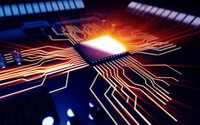
_20260129133408_708.jpg "摄图网_604147981_科技感芯片蓝色发光元件(企业商用).jpg")
The core charm of the exhibition lies not in an isolated popular product, but in the display of a "universal" ability. The "Multimodal Interaction Development Kit" released by Alibaba Cloud encapsulates complex AI model capabilities into easily callable modules, greatly reducing the threshold for hardware intelligence. This directly gives rise to the "Shenzhen speed" in the field of hardware development - ideas can be quickly transformed into tangible objects. But the deeper transformation lies in the shift of the hardware defined paradigm itself. In the past, hardware focused on stacking functions and competing in parameters, while today's AI hardware is committed to becoming users' "intimate companions" in vertical scenarios, whether it is robots that relieve loneliness or smart glasses that describe the world for visually impaired people. Its value core is shifting towards providing emotional value that is difficult to quantify and emotionless personal services. At the same time, the devices themselves have evolved from networked terminals that require frequent interaction to "end-to-end intelligent agents" that can perceive the environment, understand context, and autonomously plan tasks, making an efficient end-to-end cloud collaboration architecture a standard configuration. The exploration of business models has also undergone innovation, shifting from selling hardware at once to paying for the value of AI services continuously provided to users, injecting new impetus into the sustainable innovation of the entire industry.
The surging wave of terminal applications is clearly transmitted to the upstream of the industrial chain, pointing out three specific and key upgrading directions for the electronic components industry. Firstly, the upgrade of the computing power core. In order to support local real-time and smooth multimodal interaction, traditional general-purpose processors are no longer sufficient, which has led to the emergence of dedicated AI acceleration chips as the "heart" standard of intelligent hardware. At the same time, the main control chip responsible for complex task scheduling must find a more delicate balance between power consumption and performance. In order to ensure the stable operation of these high computing power units, high-efficiency power management chips using new materials such as gallium nitride have become crucial. Next is the evolution of perceptual interaction systems. In order for hardware to truly 'understand' the world, simple signal acquisition is no longer sufficient. The fusion of multimodal sensors has become the foundation, and cameras, microphone arrays, and various biosensors need to work together. The more cutting-edge trend is the emergence of "smart sensors", which means that a portion of the preliminary semantic understanding ability is placed at the sensor end, which puts new requirements on the low-power processing unit integrated internally and also promotes the exploration of the application of new sensing elements such as laser radar and flexible bioelectrodes. Finally, there is the often overlooked but crucial infrastructure upgrade. The efficient and reliable operation of AI hardware heavily relies on the basic "nerves" and "blood vessels". Large computing chips require a large number of high-performance MLCC capacitors for instantaneous current compensation, and their usage and specifications are far from comparable to traditional devices; High speed data flow requires more precise connectors; And centralized heating makes advanced thermal management materials and miniature heat dissipation components essential. These passive components and basic devices are facing the dual challenges of a surge in usage and a leap in performance.
This transformation not only changes product demand, but also reconstructs the industrial ecosystem. The traditional linear supply chain has been broken, and software and hardware need to be designed collaboratively in advance; Rapid iteration requires extreme agility in the supply chain; The market's pursuit of reliability is driving higher standards to permeate the entire industry. Looking ahead to the future, the trillion dollar hardware market driven by AI is no longer a concept. For the electronic components industry, the growth logic will shift from relying on a single explosive product to serving massive and fragmented intelligent scenarios. In this process, vendors who can provide cost-effective solutions or possess high reliability technologies will be revalued and are expected to transform from suppliers to true innovation partners. The ability to grasp the core requirements of the transition from "functional execution" to "intelligent carrying" will be the key to defining the future pattern.
Next: Looking at the transformation of computing power from the perspective of 10 trillion kilowatt hours of electricity consumption, domestic power supplies and heat dissipation components are accelerating their breakthrough