Weixin Service

 DouYin
 KuaiShou





Rocket launch, satellite networking, and space-based computing power - the "gold mining map" of components behind SpaceX's entire industry chain
Date:2026-06-26 14:08:00 Views:2552
In June 2026, SpaceX officially landed on NASDAQ, and on its first day of trading, its market value continued to rise, quickly becoming a benchmark enterprise in the global commercial aerospace industry. Relying on core businesses such as recyclable rockets, satellite Internet and space-based computing cluster, SpaceX has built a complete industrial ecology covering rocket launch, satellite manufacturing, and terminal application to space computing. With the unique operation model of "vertical integration+open supply chain", it completely changes the old pattern of high cost, long cycle, and weak mass production capacity in the traditional aerospace industry. It also brings massive demand for electronic components such as RF devices, semiconductors, special materials, and high-end PCBs, giving birth to a billion dollar incremental market and bringing new opportunities and practical challenges to the global electronics industry, especially the domestic supply chain.
SpaceX adopts a supply chain strategy of "80% self-developed and 20% outsourced" to achieve large-scale and low-cost manufacturing of rockets and satellites. In terms of rocket business, Falcon 9 has achieved repeated launches, and the new generation of starships is committed to reducing the cost of a single rocket to one tenth of that of traditional rockets. Recyclable rockets have extremely high requirements for supporting components: they must adapt to extreme environments, maintain stable operation, and balance lightweight. In the power system, the Raptor engine uses 3D printing technology to create core components, using special metals such as niobium alloy and titanium alloy, which can withstand high temperatures above 2400 ℃. The value of special materials for a single rocket is considerable. The avionics system is equipped with radiation resistant microcontrollers, FPGAs, and high-precision MEMS sensors to ensure the smooth operation of the rocket in strong radiation and high vibration environments. The structure of the arrow relies on high-strength titanium alloy and carbon fiber composite materials, and the insulation system is matched with ultra-fine glass fiber insulation cotton to cope with the huge temperature difference in space.
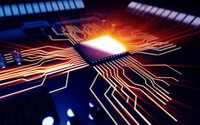
_20260626140817_403.jpg "摄图网_701175136_科技航天融合芯片电路板航天器星空设计(企业商用).jpg")
Satellite business is an important part of SpaceX's industrial chain layout. At present, the Starlink program has completed the deployment of thousands of low orbit satellites, with plans to reach 42000 in the future. It will continue to reduce the cost of single satellites and gradually build a communication network that links satellites, ground terminals, and user devices. Correspondingly, satellite components exhibit high-frequency, integrated, and low-cost characteristics. Each Starlink satellite is equipped with multiple phased array antennas, with RF chips, beamforming chips, and transceiver components as core supporting products. Compound semiconductor materials such as gallium nitride and gallium arsenide are widely used. Modules such as onboard power management, attitude control, and onboard computers are no longer limited to traditional high priced aerospace grade devices, but are now widely used with commercial grade semiconductors, effectively reducing manufacturing costs. The satellite energy system consists of solar panels and polyimide encapsulation film, which resist cosmic rays and extreme temperatures.
The SpaceX industry chain continues to extend downstream, expanding the demand space for electronic components. The integration of a large number of RF units into Starlink ground terminals has driven an increase in demand for high-frequency high-speed connectors, LCP flexible boards, and millimeter wave antennas; Space based data centers and AI computing satellites also provide new growth opportunities for high-end GPUs, liquid cooled cooling components, and high-speed optical communication chips.
With the continuous expansion of the entire industry chain, the four major tracks of RF devices, semiconductor chips, special electronic materials, and high-frequency and high-speed PCBs are experiencing development dividends, with shipments and prices rising synchronously, and technological iteration accelerating. RF devices include phased array antennas, RF front-end, power amplifiers, filters, etc. With the increasing demand for satellites and terminals, the market demand is growing rapidly. The industry is transitioning from traditional compound semiconductors to silicon-based routes, with continuous integration of product architectures. Domestic manufacturers have formed advantages in segmented fields such as high-frequency connectors and satellite antennas. The semiconductor chip field breaks the inherent pattern of aerospace dependence on dedicated chips - commercial grade devices are widely used in control, power supply, RF, baseband and other modules, and radiation resistant chips and sensors ensure stable operation; The space-based computing power business further drives the demand for high-end computing and storage chips. The special working conditions of rockets and satellites make high-temperature resistant alloys, packaging materials, insulation materials, optical glass and other special electronic materials essential. Many domestic enterprises have entered the supply chain with technological breakthroughs, and their products have passed rigorous space verification, steadily increasing their market share. High frequency high-speed PCBs are widely used in satellite communication and rocket avionics. The growth in market demand has driven the coordinated development of upstream copper-clad laminates, high-frequency resins, and specialized copper foils. Top domestic PCB companies have achieved batch supply and stable orders.
Nowadays, domestic enterprises have deeply integrated into SpaceX's global supply chain, covering special materials, structural components, RF components, terminal support and other links, and the order scale has been increasing year by year. Many local enterprises have become core suppliers in segmented fields, continuously delivering supporting products and relying on large-scale orders to expand production capacity and optimize costs. At the same time, SpaceX has adopted a procurement model for commercial grade components on a large scale, reducing the entry threshold for aerospace components. Domestic enterprises can not only rely on cooperation to complete product reliability verification and narrow the technological gap with top international enterprises, but also take advantage of the opportunity to enter the domestic commercial aerospace project supply chain and achieve industrial upgrading in areas such as high-frequency PCBs, special materials, and RF connectors.
Of course, challenges cannot be ignored: changes in the geopolitical environment may bring about supply chain fluctuations; High end RF chips, anti radiation core chips, and core algorithms are still in the hands of overseas enterprises, while domestic enterprises are mostly concentrated in the mid to low end supporting links; In addition, the certification cycle for aerospace products is long and the standards are strict, so it is necessary to continue to increase investment in research and development and testing in the future, and steadily break through technical barriers.
With the full release of production capacity after SpaceX's listing, the frequency of starship launches has increased, and the deployment of Starlink satellites has steadily increased, the high prosperity of the electronic components industry will continue for a long time. The future trend is clear: large-scale production continues to drive down component costs, coupled with material and chip technology upgrades, forming a virtuous industrial cycle; With the deep integration of satellite Internet and space-based computing, components integrated with communication and computing will become a new growth hotspot; With the advancement of domestic enterprises' technological strength and the rapid rise of local commercial aerospace, the discourse power of domestic supply chains in the global aerospace electronics field will continue to increase.