Weixin Service

 DouYin
 KuaiShou




From Maker Toys to Industry Variables: OpenClaw Ignites Electronic Supply Chain 'Chain Reaction'
Date:2026-03-20 15:18:00 Views:1433
Recently, OpenClaw, an open-source AI intelligent agent, has rapidly broken through the maker circle and entered industrial level applications with its core advantages of lightweight deployment and low-cost implementation, sparking a nationwide innovation boom of "AI Agent+Hardware". This phenomenon level event is not only a concentrated reflection of the popularization of AI and the maturity of the open source ecosystem, but also deeply leverages the demand structure, technological roadmap, and supply chain layout of the electronic components industry - releasing considerable incremental dividends and forcing the entire industry to accelerate transformation and upgrading.
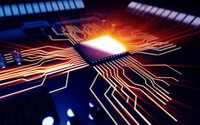
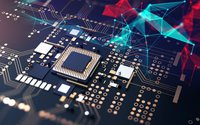
_20260320151742_549.jpg "摄图网_701122911_AI智能数据科技展示模型(企业商用).jpg")
As an open-source AI execution agent, OpenClaw relies on its minimalist deployment and flexible scalability features. In its first few months of launch, it has exceeded 500000 global downloads and over 200 million video views of related applications. Its publicly available BOM list, PCB design, and core algorithms have broken the high threshold of AI hardware in the past, driving AI computing power from the cloud to edge terminals, directly driving the structural growth of component demand, and becoming an indispensable engine of new growth in the industry.
The large-scale implementation of OpenClaw is triggering a two-way demand explosion between computing power and terminal hardware, forming a dual layer dividend transmission. On the one hand, the real-time reasoning and multi task execution characteristics of AI intelligent agents have driven the demand for high-end computing chips, storage chips, high-speed connectors and other core components, resulting in a simultaneous increase in order volume and price in related fields; On the other hand, the open source model has driven the prosperity of the maker market, education sector, and small smart device market, giving rise to incremental demand for small batches and multiple varieties of components. Low power control chips, sensors, resistive capacitive sensors, and other general-purpose devices have ushered in new growth space. At the same time, OpenClaw's requirements for high hardware integration, high frequency, high speed, and low power consumption are also driving the industry to accelerate technological iteration, promote PCB high-density, component miniaturization, and material process upgrades, which creates a rare opportunity for domestic low-power chips to break through.
In addition to visible demand growth, OpenClaw is quietly changing the game rules of the electronic components market. The demand characteristics of small batches, short delivery times, and high volatility are impacting the traditional standardized supply chain model, forcing the industry to transform towards flexible supply. The continuous shortage of overseas chip supply and high cost of cloud computing power have further accelerated the process of replacing domestic components. At present, multiple domestic AI chips have completed OpenClaw adaptation, and pure domestic hardware solutions have been gradually implemented, driving the coordinated development of the upstream industry chain. The spot distribution and small batch supply models have ushered in unprecedented opportunities. In this round of industry dividends, the market pattern is gradually diverging: top enterprises focus on high-end computing devices, while small and medium-sized manufacturers are deeply cultivating the segmented supporting track. However, it is worth noting that homogenization, internal competition, and the chaos of counterfeit devices have also begun to emerge, and quality control and compliance management are becoming the key to establishing a foothold for enterprises.
The transformation initiated by OpenClaw ultimately boils down to a profound industry rehearsal. It reveals the most fundamental transformation in the era of intelligent economy: "Action power" is replacing "attention" as a key indicator, and hardware is no longer just a simple traffic entry point, but the "senses and limbs" of AI to perform tasks. This means that MCU, sensors, storage chips, and computing chips must continue to evolve towards lower power consumption, higher real-time performance, and stronger environmental perception capabilities to adapt to the new mode of autonomous operation of intelligent agents around the clock. At the same time, the open source ecosystem is reshaping the value distribution of the industry chain, and upstream component manufacturers need to provide flexible and open underlying hardware solutions to the global developer community, seeking incremental growth in the fragmented long tail market.
Facing the future, enterprises need to respond to this change from a strategic perspective. On the one hand, we need to closely monitor the AI hardware trend, lay out core tracks such as computing chips, high-speed connectors, and low-power devices in advance, and deeply explore the incremental space in segmented scenarios; On the other hand, we need to accelerate the intelligent upgrading of production lines and build agile supply chains to adapt to increasingly fragmented order demands. At the technical level, increasing the research and development of core technologies, breaking through material and process bottlenecks, and deepening domestic adaptation and substitution have become unavoidable issues. At the ecological level, strict control of product quality, standardization of open source compliance, and active integration into the open source ecosystem are necessary to gradually transform from a single component supplier to an ecological service provider by jointly launching a one-stop solution with the industry chain. Against the backdrop of increasingly fierce competition in AI and the rise of supply chain autonomy and controllability as the strategic core, this is both a challenge and a historic window for the domestic electronic components industry to accelerate domestic substitution and enter the high-end supply chain.