Weixin Service

 DouYin
 KuaiShou





Humanoid robots have made comprehensive breakthroughs in racing and high jumping, and the core hardware supply chain has entered a window of replacement
Date:2026-09-20 16:35:09 Views:314
At the recently concluded World Humanoid Robot Games, multiple domestically produced humanoid robots performed outstandingly, breaking competition records in events such as short distance running, high jump, and long-distance running, achieving high difficulty dynamic performances such as high-speed running, high-altitude jumping, and stable landing. This series of breakthroughs marks the complete departure of domestically produced humanoid robots from their first generation state of stiff movements and slow movements, and the official entry into a new stage of high dynamic and high-precision motion. It is worth noting that the leapfrog upgrade of robot dynamic performance does not rely solely on algorithm optimization, but rather stems from the comprehensive iteration of the motion electronic control hardware system. The performance breakthroughs of core electronic components such as servo control chips, power semiconductors, signal chain devices, and highly reliable passive components have become the hardware foundation for robots to achieve extreme dynamic movements, and have also promoted the structural upgrading opportunities of the domestic robot electronic control component supply chain.
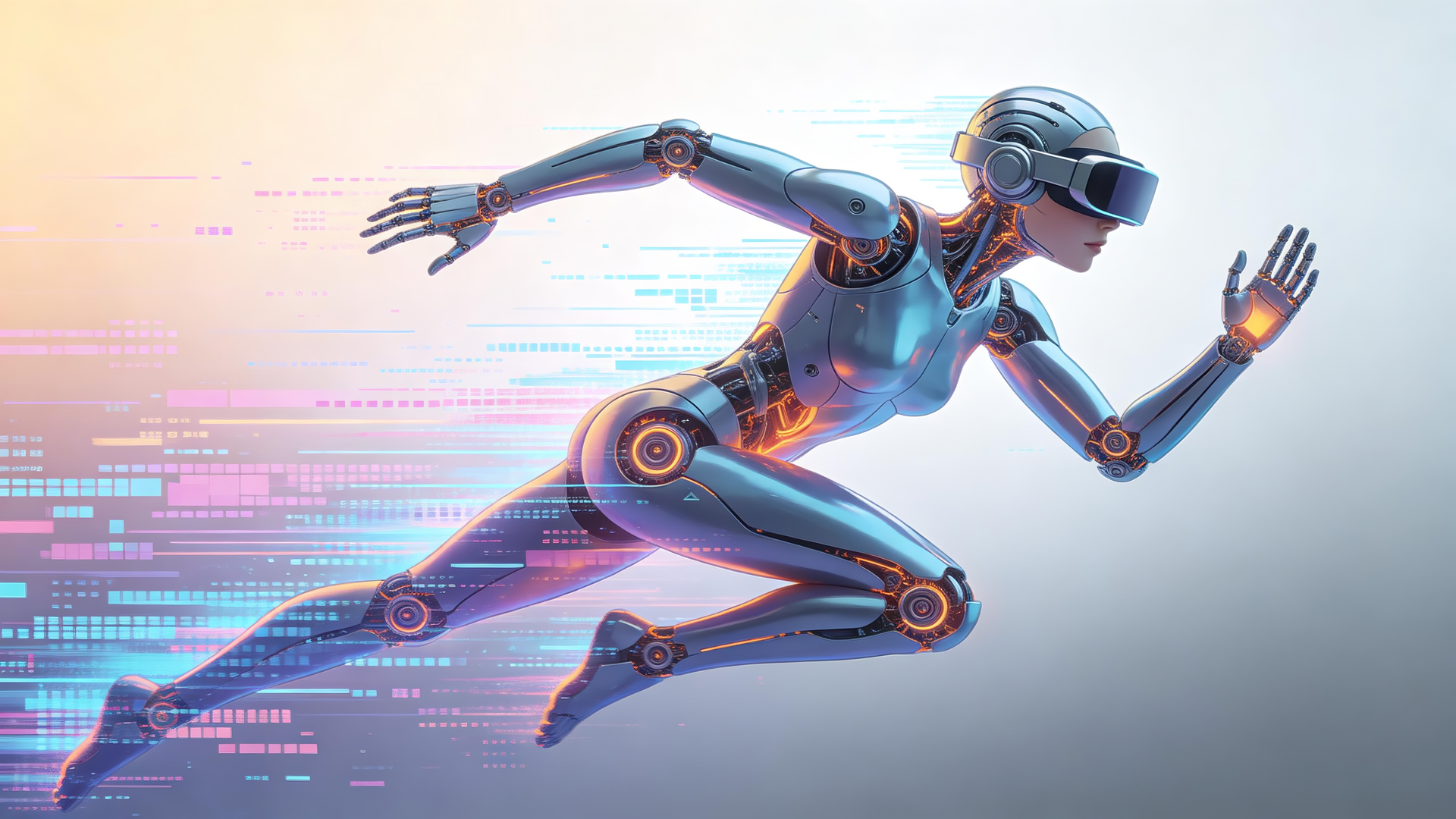
Compared to traditional laboratory static demonstrations, high-intensity dynamic scenarios such as racing, jumping buffering, and rapid directional changes on the field impose strict requirements on the response speed, control accuracy, and stability of the electronic control system, which directly forces upstream electronic components to complete technological iterations. During dynamic motion, robots need to complete multi joint collaborative computation, power output, and state closed-loop calibration in milliseconds. Traditional discrete electronic control solutions are no longer suitable for the requirements due to their large size, high latency, and poor stability. At present, the industry has fully popularized the integrated drive control architecture, relying on integrated servo drive chips and dedicated servo MCUs to achieve precise control of position, speed, and current in a narrow joint space, effectively solving problems such as motion jitter and synchronization lag, while significantly simplifying the board card structure and reducing the overall BOM cost of the machine. At the same time, RISC-V customized chips adapted for real-time control scenarios of robots are accelerating their implementation, filling the gaps in domestic computing power and continuously promoting the independent and controllable process of the electronic control supply chain.
If the control chip is the "brain" of the robot, then power semiconductor devices are the "power heart" that supports high explosive movements and are the key hardware core for breakthroughs in dynamic performance. The current mainstream of domestically produced humanoid robots adopts a 48V low-voltage bus scheme, which is suitable for high-frequency start stop and instantaneous high-power output motion conditions, and has extremely high requirements for power device loss, heat dissipation, and volume. Traditional silicon-based devices have high losses and generate large amounts of heat, making it difficult to support long-term high-intensity dynamic motion. However, third-generation semiconductor devices such as gallium nitride (GaN), with their advantages of low conduction loss, high switching frequency, and miniaturization, are perfectly adapted to high-frequency joint working scenarios, effectively suppressing heat generation, reducing power attenuation, and ensuring continuous and stable output of servo systems. Paired with high-precision power management chips, it can intelligently adjust multiple voltages, flexibly switch between explosive power and energy-saving modes, balance the robot's motion performance and endurance, and solve the industry pain point of early models that cannot balance performance and endurance.
Smooth and precise dynamic motion cannot be achieved without the high-precision sensing loop built by signal chain components, providing underlying support for robot motion control and safe operation. Complex movements such as high-speed running, aerial landing, and flexible interaction require real-time feedback of massive data such as angle, speed, torque, and current from all body joints. Among them, high-precision magnetic encoders achieve precise joint positioning and eliminate motion deviation; High speed ADC chip samples motor current in real-time, monitors load status, and proactively avoids overload and imbalance risks; Simulating front-end conditioning devices optimizes flexible interaction capabilities, making the robot's landing, contact, and grasping movements softer and more controllable. In response to voltage fluctuations and signal interference caused by high-frequency operation in electronic control, high-quality passive components such as low ESR MLCC and high-frequency thin film capacitors continue to play a filtering, stabilizing, and anti-interference role. Paired with industrial grade high reliability connectors, they resist motion vibrations and temperature fluctuations, comprehensively improving the stability and service life of the electronic control system.
The technological breakthrough on the competition side has quickly landed in commercial research and development scenarios, promoting the transition of humanoid robots from prototype testing to small-scale mass production. It also puts forward higher requirements for component selection and adaptation, import substitution, delivery efficiency, and supply stability. In the past, the industry has long relied on customized components from overseas, with long lead times, high costs, and difficulty in substitution, which seriously hindered the iteration and mass production pace of domestic robots. With the increasing maturity of domestic component technology, the industry has officially entered the golden window period of domestic substitution for batch landing. Professional and efficient supply chain services have become the core support for accelerating hardware research and development.
Overall, the breakthrough and industrial upgrading of domestic humanoid robots in the field are essentially the iterative upgrading of the upstream electronic component supply chain. Algorithms determine the upper limit of robot movements, while core hardware such as electronic control chips, power devices, and sensing components determine the lower limit of industrial implementation. As the dynamic motion technology of humanoid robots continues to mature and the commercialization process accelerates, miniaturized, highly reliable, and efficient domestically produced electronic control components will continue to release incremental dividends, continuously improve the local supporting ecology, and build core competitive barriers for the domestic humanoid robot industry.