Weixin Service

 DouYin
 KuaiShou





Focus on the breakthrough of Zhuque III recycling: the commercial aerospace track is heating up, and opportunities for domestic components are highlighted
Date:2026-08-28 15:30:00 Views:943
In August, the Blue Arrow Space's Zhuque III Yao-2 carrier rocket successfully completed its launch and recovery mission, sending the Honghu 03 satellite into its designated orbit. Its first sub stage achieved the first landing leg vertical recovery of China's orbital stage rocket, marking the official opening of the complete engineering loop for the domestic private liquid oxygen methane reusable rocket to enter orbit and recover. The success of this mission is not only a major breakthrough in commercial space launch technology, but also a complete change in the service mode of traditional space rockets, shifting from one-time use to multiple reuse iterations, directly driving the comprehensive upgrade of space electronic component technology standards, product demand, and supply chain system, and opening up a new high-end incremental market for the domestic electronic component industry.
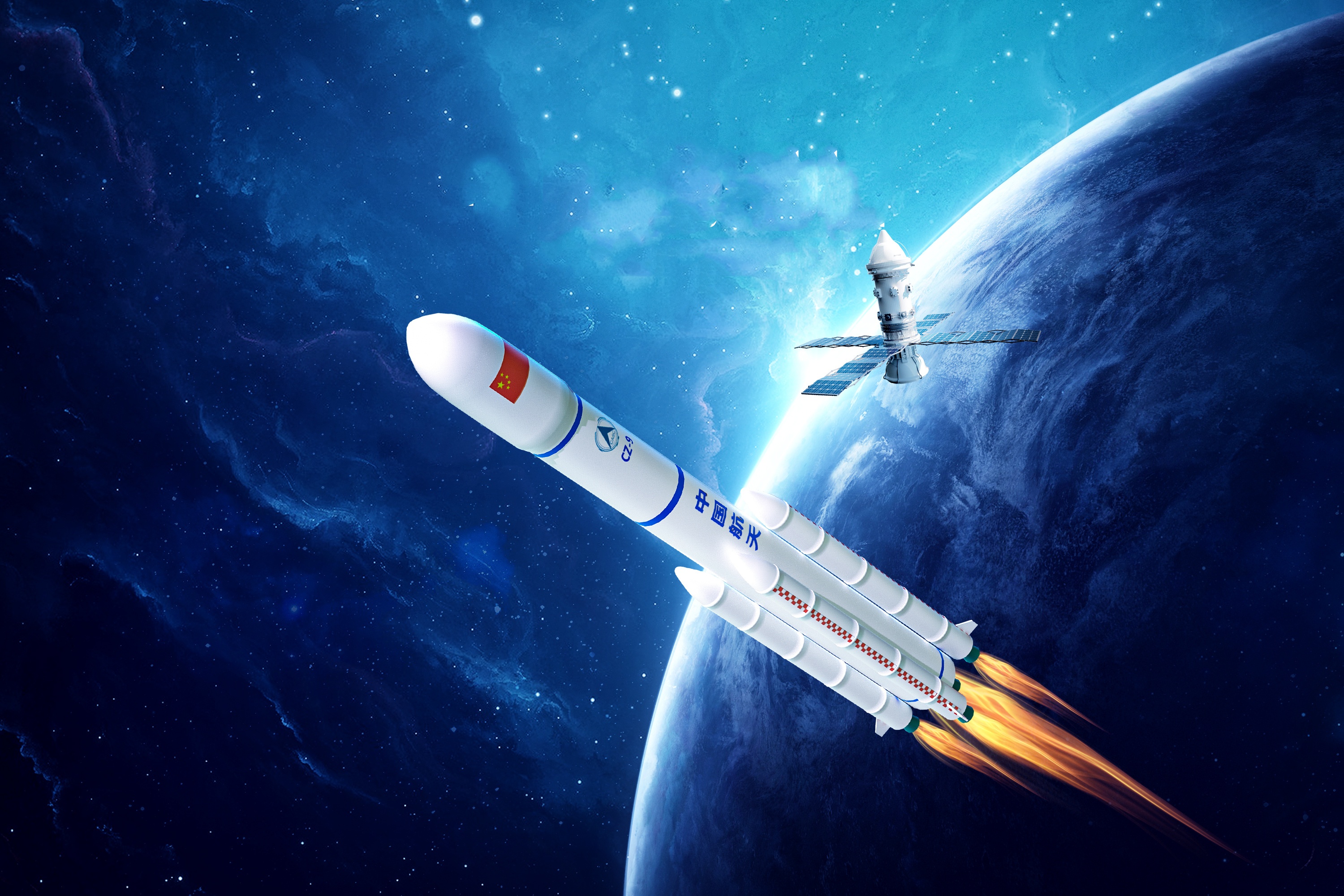
Compared to traditional disposable rockets, reusable rockets have fundamentally changed their requirements for electronic components. Traditional rocket components only need to ensure the reliability of a single flight mission, without considering long-term service wear and tear; The first sub stage of Zhuque III needs to repeatedly experience launch vibrations, atmospheric re-entry high temperature and temperature differences, landing high-intensity impacts, as well as fatigue wear and tear from multiple start stop and repeated service, which fully upgrades the core assessment indicators of aerospace components. Wide temperature range adaptation, resistance to multiple vibration impacts, fatigue aging, monitoring, and easy maintenance and replacement have become the new core standards for reusable rocket components. Traditional components that are suitable for single missions can no longer meet the engineering needs of new commercial aerospace, forcing the iterative upgrading of all types of aerospace electronic components.
The upgrade of operating standards directly drives the structural demand expansion of various core electronic components. In the field of core control, the precise recovery of rockets relies on millisecond level high-speed computing and stable operation of semiconductor chips such as FPGA, aerospace grade MCU, and radiation resistant storage. This real flight mission has become an important verification scenario for domestic high reliability chips, accelerating the large-scale landing of domestic aerospace grade semiconductors in the commercial aerospace field. In the field of passive components, the complex surges and high and low temperature cycling caused by multiple rocket ignition and start stop cycles have driven the continuous growth of demand for high reliability and wide temperature range resistant aerospace MLCCs, tantalum capacitors, and thick film power circuits. The industry is gradually abandoning the traditional high-end aerospace fully customized model and promoting the research and adaptation of cost-effective COTS shelf mounted devices to achieve a balance between reliability and cost.
At the same time, the iterative demand for supporting components such as onboard sensors, connections, and power supplies is simultaneously released. To ensure the safe maintenance and go around of rockets after reuse, the MEMS sensors and pressure vibration detection devices carried on the rocket body need to have long lifespan and high stability, and be able to retain real-time flight condition data to support the evaluation of the health status of the rocket body; Connectors, relays, and special cables need to withstand multiple plug and unplug maintenance, repeated mechanical deformation, and temperature shock, greatly improving product service life and anti-interference ability; Power management devices and power semiconductors need to adapt to frequent load fluctuations to ensure stable operation of the entire power system. The upgrading and iteration requirements of various segmented devices continue to expand the market space of the electronic components industry.
The successful recycling of Zhuque-3 has a deeper value in reconstructing the market demand logic and supply chain ecology of aerospace electronic components. The traditional aerospace market is centered around single launch support, with a single order model and limited incremental growth; Reusable rockets have opened up a full lifecycle demand mode, where a single rocket can go around multiple times and generate continuous demands for component maintenance, replacement, spare parts procurement, etc., bringing long-term stable order increments to component companies. At the supply chain level, domestic commercial aerospace is no longer limited to the traditional national team supporting system. A large number of private specialized and new component enterprises are deeply involved in model matching, breaking down the supply barriers of high-end aerospace components. Domestic components have ushered in a critical window period from sample testing to batch installation and actual flight verification.
Along with the rapid development of the industry, new challenges have also emerged. At present, there is no unified life standard and testing specification for reusable rocket components in China. Ground simulation testing cannot fully replicate real space and re-entry conditions. Core data such as device fatigue failure and long-term stability still need to be accumulated through a large number of flight tests. How to control product costs under high reliability requirements has become a core issue for major component manufacturers to break through the high-end aerospace market.
In the long run, the technological breakthrough of Zhuque-3 indicates that reusable rockets in China have entered the stage of large-scale engineering application. With the continuous decrease in launch costs, the pace of low orbit satellite constellation networking will accelerate comprehensively, and the experience of component technology iteration at the rocket end will quickly spill over to the field of onboard electronics, driving the sustained prosperity of the entire aerospace electronic component track. For domestic electronic component companies, accurately adapting to the new technological standards of reusable rockets and seizing the commercial aerospace supporting track are important directions for future high-end and high value-added transformation.